
On this page
Understand the place
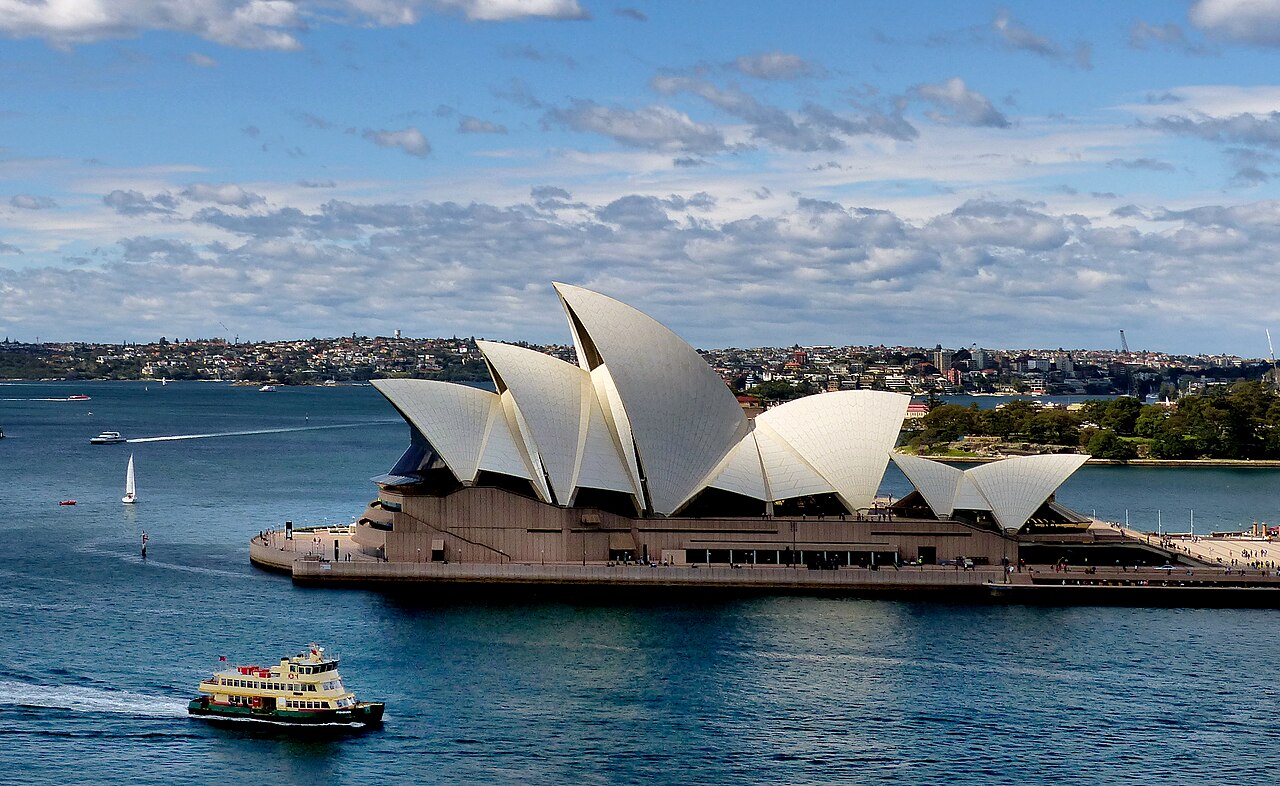
Designed by Danish architect Jørn Utzon and opened in 1973, the Sydney Opera House remains an active performing arts venue. Its significance connects form, engineering exploration and ongoing cultural life.
It is not an empty building kept only for sightseeing. Connect your visit with your own interests: explore its spaces for design, or begin with the programme if music and theatre matter most.
What to look for
Move from silhouette to scale
Use a harbour-side viewpoint to understand the relationship between roofs and water, then approach to notice surfaces and public spaces. Leave time for both the overall outline and the experience of standing beside it.
Choose what an interior visit should add
A tour explains the building; a performance lets you experience a space in use. Either can make a satisfying visit. You do not have to combine everything on one day.
Plan your visit
Choose one main experience first
For the exterior, organise around weather and a harbour walk. For the interior, investigate tours. For a performance, begin with programme, date and seating. These have different reservation requirements.
Include arrival and rest
Use 2–3 hours as an editorial allowance for the exterior and one tour, including your own walking and rest. It is not a measured duration. Add dining, entry and return travel separately if attending a performance.
Tickets and inclusions
Compare three things: tour or performance, actual tour language and suitability for your access needs. A translated booking page does not establish the spoken language; a performance ticket does not automatically include a building tour.
Check party size, age or concession eligibility and cancellation terms, then confirm the price for the selected date. Similar product names do not make tours interchangeable. An exterior guide is not permission to enter an auditorium.
Opening and admission
Tours have specific sessions and performances have their own start and entry times. One general daily schedule cannot describe the whole building. Keep both the booking confirmation and the product calendar.
Recheck arrival time and entrance before leaving. For an evening performance, plan transport after it finishes as well as getting there. This guide does not claim live ticket availability.
Getting there and entrances
The official arrival page identifies Circular Quay for public transport, followed by a walk to the Opera House. Reaching the station is not reaching your tour meeting point.
Plan the final stretch to the entrance named on your booking. Include wheelchair, stroller or stair-avoidance needs in that decision. Give a driver a specific drop-off arrangement rather than just a photograph of the building.
Accessibility and visitor needs
The separate step-free Mobility Access Tour meets at Stage Door and needs its own booking arrangements. It is not the same route as the standard tour.
Request hearing or other assistance in advance and wait for the operator’s confirmation. Match the route to your access needs before deciding language and time, rather than dealing with stairs after purchase.
Preparation and etiquette
The standard tour is described as about an hour with roughly 300 stairs and no lift route. Consider your ability to remain on foot and choose suitable footwear and belongings.
Inside working performance spaces, follow staff instructions for photographs and pauses. Ask about a venue that interests you, but do not assume that every auditorium is included.
Planning nearby visits
Leave space for the harbour
A walk towards Circular Quay can be time to observe the city rather than another compulsory stop. Choose its length around your exit, weather and energy; a rest can be a worthwhile next stop.
Treat a ferry as a separate decision
For a view from the water, check the actual route, timetable and return before committing. Not every ferry provides the same viewpoint, and transport is not automatically part of a building tour.
Common questions
Can I focus on the exterior?
Choose according to your interests rather than buying an unsuitable activity merely to complete a checklist; public-space access remains subject to local arrangements.
Why do tour entrances differ?
Routes and access arrangements differ. Follow your confirmation, not any nearby queue.
Is the standard tour suitable if I cannot use stairs?
Do not assume so. Investigate the separate step-free tour and explain your needs.
How this guide was prepared
- Published by
- Bangsai
- Method and experience
- AI assisted the organisation and translation of public official sources. This is not a first-hand visit report and has not been reviewed by a named local expert. Sources are linked by section; unresolved details are identified.
- This update
- 2026-09-07 · Expanded context, viewing priorities, admission, schedules, arrival and visitor needs, with sources and uncertainty identified.
- Commercial disclosure
- This page sells no tickets and contains no paid recommendations or commission-bearing booking links.