

On this page
The first decision is the building, not the time slot
For the broad history collection in central Xi’an, select the Shaanxi History Museum main building at **91 Xiaozhai East Road, 小寨东路91号**. Its Qinhan Gallery is a different site in Xixian New Area, on the eastern section of Lanchi Third Road. The names share an institution, but a booking or taxi destination for one does not take you to the other.
The practical distinction is now larger than location. The current Chinese visitor guide requires a reservation for ordinary main-building admission, accepts passports for non-mainland visitors and releases basic-exhibition places five days ahead at 17:00 China time. Qinhan Gallery currently allows entry with an original valid document without a reservation, with staff handling overseas-document checks. Main-building paid mural or specified golden-art tickets bought online remove the need for a second free-entry booking; inspect the actual product before purchase.
Pick the main building for a broad sequence through Shaanxi’s past, especially if the Tang galleries or specialist murals matter to you. Pick Qinhan for a concentrated Qin–Han subject and the travel time that separate location requires. If you cannot reserve the main building, Qinhan is a meaningful alternative, not the same collection conveniently moved to another entrance.
Make the reservation an order you can actually use
Prefilled details are preparation, not admission. The Chinese system distinguishes its prefill query from its successful-order query: use the latter to establish that the visit is confirmed. A screenshot of completed names, a selected date or a spinning submission screen is insufficient.
Before release time, decide who will attend and which document each person will carry. Check the names, document types and visit date carefully. If somebody else assists with the booking, make sure you receive the final record and know which account controls cancellation. This matters more than having a reassuring message that says someone “will arrange the tickets.”
The museum’s May 18, 2026 English reservation notice lists passports among accepted documents, allows up to five visitors per reservation and describes login, document selection, verification and time-slot confirmation. It also says a document can have no more than four bookings within 30 days, counting cancellations, and states a 180-day no-show restriction. Cancel through the official account before the applicable entry deadline if plans change; paid exhibitions have their own product conditions.
These published rules do not prove that a verification code will reach every overseas phone or that every payment method will work. If your document choice is missing, a code fails or the order remains uncertain, contact the museum with the exact failed step. Do not substitute somebody else’s Chinese ID to get past the form: the apparent booking then belongs to the wrong person.
Save the official order offline and carry the original booked document. Keep enough time to find the correct entrance and complete the check. A museum reservation is a time commitment; putting an uncertain long-distance excursion immediately before it creates a failure you can often avoid when planning.
Use the current season’s hours, not the holiday extension
The English homepage gives the main building’s May 6–November 14, 2026 schedule as 08:30–19:00, last entry 18:00. Qinhan is 08:30–18:00, last entry 17:00 for that period. Check the calendar for the actual day, particularly a weekly closure or public holiday, and obtain the next seasonal schedule for travel after November 14.
The September holiday notice extended main-building hours only for September 25–27 and October 1–7. Its 07:30 opening and 20:30 closing are not a general October timetable. The same notice identifies the main collection in Halls 1–3, the Hejiacun exhibition in Hall 4 and the charged mural exhibition in the east basement; it records what opened for those dates, rather than guaranteeing every temporary display indefinitely.
Arriving just before last entry also leaves little time to understand a large collection. For the main building, reserve roughly two to three hours for a selected route, with additional time for a specialist exhibition or a guide. This is an editorial estimate. Concentrating on fewer cases is often better than giving every room the same brief glance.
Build a route around a question instead of a treasure checklist
The basic exhibition description presents seven phases, with particular emphasis on Zhou, Qin, Han and Tang. Use that structure as orientation, then choose a question that links objects across time. You can explore how authority was recorded, how objects performed social roles, or how makers combined technical solutions with decoration.
Authority: compare what an object says with what its shape does
Begin with bronze vessels in the Zhou material. Look for the relationship between the exterior form and an inscription: one makes the object imposing, while the other preserves a particular act or relationship. If an inscription image or transcription is displayed, read it rather than assuming decoration is the only reason the vessel matters.
The museum’s English account of the Ding of Yu explains that its inscription records a land transfer and memorialises the event. That gives you a useful way to approach a bronze case even if that exact object is not on view: ask who commissioned the object, what transaction it records and how the inscription changes your understanding of the vessel. The catalogue is a learning source, not a guarantee of its case location today.
Then carry the question forward into the Qin and Han sections. Look for labels describing administration, burial or public authority, and compare those functions rather than looking only for increasingly elaborate craftsmanship. The aim is to leave with one intelligible connection between two periods, not merely the names of two dynasties.
Tang: distinguish a living world from a burial representation
Tang pottery, metalwork and paintings can be visually immediate, but their excavation context matters. A figure from a tomb, a vessel from a buried hoard and a wall painting created for a burial space are different forms of evidence. Their labels answer different questions about use, ownership and representation.
For pottery figures, compare stance, clothing and the relationship between figures before drawing a social conclusion. Ask whether the label identifies a funerary role or an everyday object. A representation of a person is not automatically a literal portrait, and a luxurious object is not a measure of how everyone lived.
If you visit Hejiacun’s hoard exhibition, keep the shared discovery context in mind. The museum describes the Tang hoard excavated in October 1970 and its diverse fine objects. Choose two vessels and compare material, surface work and intended function. A cache groups objects archaeologically; it does not automatically explain every owner’s identity or the reason for concealment. Where the label offers a hypothesis, retain that distinction.
Ingenuity: ask how the object could work
The Yaozhou celadon pot description identifies a bottom inlet, an animal-shaped spout and an elaborate loop handle. Use the catalogue image, or an exhibited object if available, to separate decoration from the liquid’s route. Where is the inlet? Which part is the outlet? Does the apparent lid behave as you expected?
This can make the later material worth studying after the major capital periods. The English page’s era label and printed date range conflict, so this guide does not use its numerical dating as a firm chronology. A label error should not become a confidently repeated date in a visitor itinerary.
Is the mural exhibition worth a separate ticket?
Choose it if you want to spend time looking at images and how they were conserved, rather than only the portable objects in the free basic exhibition. The museum’s mural introduction describes fragile paintings from Tang tombs and subjects including court attendants, polo, hunting and envoys. The collection totals on that page refer to museum holdings, not the number necessarily displayed during your session.
Approach one scene slowly. First identify the setting and the people; then examine posture, clothing, objects and the direction of movement. Finally, use the label to establish the burial context. What the image selects to show is itself part of the evidence. A courtly or funerary picture should not be treated as a photographic survey of ordinary Tang life.
Read the current ticket inclusions before buying. The June 2026 guiding notice says purchasing the mural-gallery ticket also permits the Han Xiu tomb mural conservation exhibition. That is a useful connection between looking at paintings and understanding preservation, but guiding and exhibition admission remain separate expenses. This guide has not verified a live paid-ticket checkout price and therefore does not repeat the conflicting CNY 270 or 300 figures circulating in travel articles.
Do not buy a specialist ticket merely as an unexplained way around a full free-reservation calendar. Consider whether you want its subject, whether the correct date is available and what the purchase actually includes. A more expensive visit is not automatically a better route through the collection.
English guiding: the tariff is per service, not a basic-entry fee
The museum’s June 22, 2026 tariff is published as an image. Its small-group entries cover one to ten people; the listed English options are:
| Official English explanation | Listed duration | Listed service price |
|---|---|---|
| Basic ancient-civilisation exhibition | 90 minutes | CNY 600 |
| Hejiacun hoard exhibition | 40 minutes | CNY 200 |
| Mural gallery and Han Xiu conservation exhibition | 60 minutes | CNY 300 |
Swipe to see the full comparison
These are explanation-service rates for the stated group range, not charges for each participant and not the mural admission ticket. Six people sharing the CNY 600 basic-exhibition service would divide that service cost to CNY 100 each, if the group and service are available. That arithmetic does not create a guaranteed departure or a right to recruit a group inside the museum.
Choose the guide by subject. The broad route is useful if you need a chronological framework; the shorter Hejiacun explanation suits a focused interest in metalwork and excavation context. Ask about language, availability, meeting place and ticket prerequisites before paying. The lower-priced team services on the same tariff are marked Chinese, so do not book one expecting the small-group English service.
A famous object may be in the catalogue and absent from the room
The silver sachet with grape, bird and floral motifs is a particularly clear example. Its current Chinese collection record says it is **not exhibited**. Older articles, videos or a souvenir bearing its image do not override that status.
If one object is your main reason to travel, check its individual record and ask the museum whether it will be displayed on your date. Ask for the gallery as well as the title; a photograph of a collection object is not an exhibition map. If it is unavailable, decide before arrival whether the rest of the collection still meets your interest.
Do not spend the whole session hunting an old “top ten” list. Use the current gallery labels and select alternatives with comparable materials or functions. A productive visit can explain why an object matters even when the most famous example is temporarily absent.
Practical help inside, and a workable fallback outside
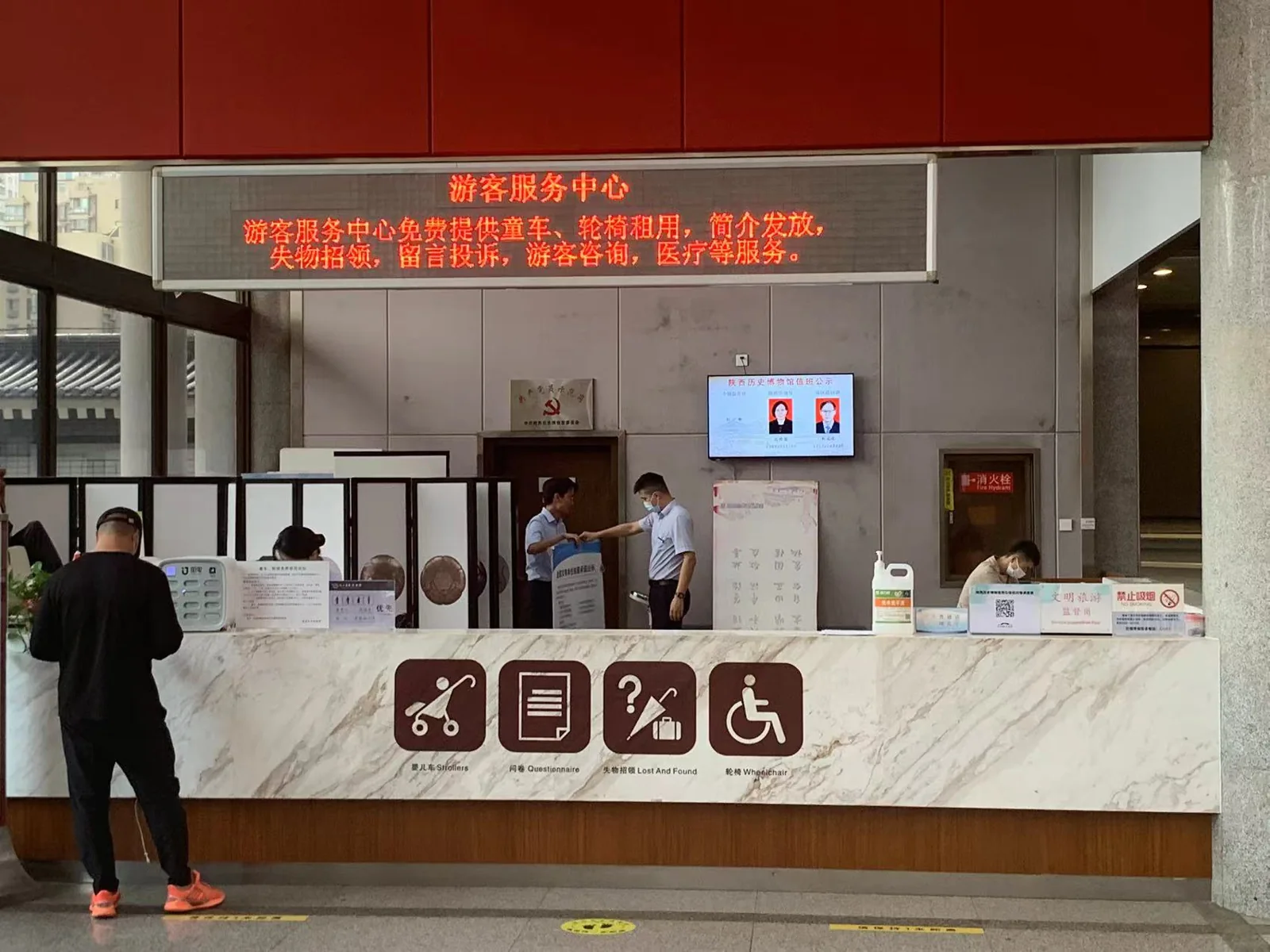
The accessibility service page documents accessible toilets, routes and lifts, including a South Gate entrance route, and describes complimentary wheelchairs and strollers at the service centre. Confirm availability and the continuous route to your selected basement or gallery; equipment being listed does not reserve it for you.
For a small child, a shorter chronological visit with one visual comparison can be more successful than a complete tour plus every special exhibition. Arrange breaks before fatigue decides the route for you. For a wheelchair user, confirm the exit as well as the entrance and ask staff which lift connects the intended exhibition.
If the main-building booking fails, first distinguish a failed submission from a confirmed sold-out date. Use official assistance for a technical problem; reconsider the itinerary for a genuine lack of places. Qinhan’s currently published document-entry route is an option if its subject and separate journey suit you. Do not travel there expecting the main building’s Tang rooms.
Leave the hotel with the correct building name, confirmed main-building order where required, original passport and a selected exhibition plan. Inside, use the labels to test one or two questions. That gives the museum a role in understanding Xi’an, rather than turning it into another collection of photographs without a story.
Sources and editorial note
Individually read current rendered Chinese guide, May18 English booking notice, June22 actual guiding price image, latest September exhibition list and separate collection/exhibition/conservation records. Independently devised object-led route around authority, burial context and function. AI-assisted desk research; no checkout, phone-code success, guide appointment or field visit claimed.
Catalogue holdings do not guarantee display. Posted English guiding tariff is a group service, not admission or confirmed availability. Paid exhibition checkout prices, international SMS and guaranteed wheelchair availability remain untested.
- https://www.sxhm.com/guide.html
- https://en.sxhm.com/index.html
- https://en.sxhm.com/en/new/notices/detail/1018519.html
- https://www.sxhm.com/guide/visit/detail/3018547.html
- https://www.sxhm.com/basic_display.html
- https://www.sxhm.com/guide/visit/detail/1018630.html
- https://www.sxhm.com/tang_mural.html?_isa=1
- https://www.sxhm.com/Hejia_village.html?_isa=1
- https://www.sxhm.com/collections/detail/9948
- https://en.sxhm.com/en/new/treasure/detail/18036.html
- https://en.sxhm.com/en/new/treasure/detail/18045.html
- https://www.sxhm.com/guide/disable/detail/16298.html?_isa=1