

On this page
The garden is a different visit from the shopping district
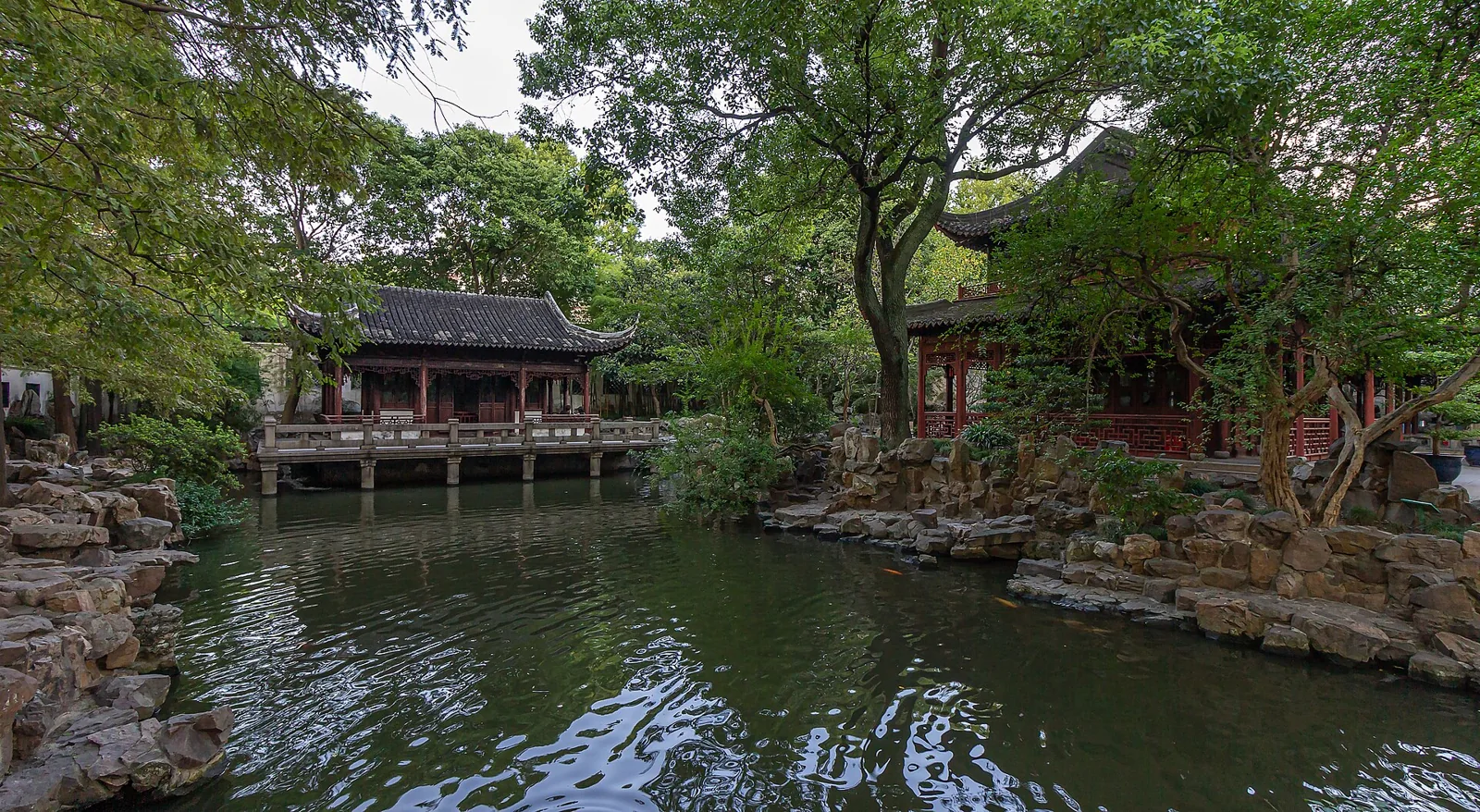
Choose **Yu Garden, 豫园**, if you want a classical landscape of rockwork, water, halls and changing viewpoints. Choose the surrounding Yuyuan Garden Malls district if your priority is food, shopping and street atmosphere. They are adjacent, but spending an hour among the shops does not mean you entered the historic garden. The nearby City God Temple is another destination; a garden ticket should not be assumed to include it.
Shanghai's official introduction identifies the garden as a former Ming private garden beside the temple and commercial district. That relationship explains the visitor confusion: several places use “Yuyuan” in their names and photographs. Before buying a package, identify whether its product is **daytime garden admission**, a **night garden performance**, a **festival-area ticket**, a meal or a combination with specifically listed inclusions. Municipal introduction.
For a first visit focused on garden design, we suggest entering during the ordinary daytime period and allowing roughly one and a half to two hours inside. Add food and neighborhood browsing afterward. That viewing duration is our estimate, not an operator promise or a reason to rush through a crowd. If you arrive late, protect the garden's admission cutoff before settling into a long restaurant queue.
Current daytime prices and the entrance to use
The operator's visitor-information page, inspected in the browser, posts these standing terms:
| Item | Operator's published terms |
|---|---|
| Daytime hours | 09:00–16:30; admission stops 16:00 |
| Regular closure | Monday, except statutory holidays; separate Spring Festival notices apply |
| Adult high-season ticket | RMB40, April–June and September–November |
| Adult low-season ticket | RMB30, July–August and December–March |
| Buying directly | South and north gate windows, or the official 上海豫园 mini-program |
| North entrance | 168 Fuyou Road, 福佑路168号; individuals and groups |
| South entrance | 279 Yuyuan Old Street, 豫园老街279号, near the Nine-Turn Bridge; individuals |
| Posted reductions | Half price for ages 60+, eligible ages 6–18 and full-time undergraduate-or-below students with proof |
| Young children | Free at age six or below, or height 1.3 metres or below; accompanied, maximum three per adult outside groups |
Swipe to see the full comparison
Bring original passport and any eligibility document; ask the ticket window how overseas concession proof is checked. Our page inspection did not test a concession transaction.
The high season is not simply “summer”: July and August fall in the posted **RMB30** period. In October the posted ordinary adult rate is **RMB40**. Two adults at that rate total RMB80 before any separately purchased product. This simple arithmetic is useful when comparing a tour package; its higher price may pay for guiding or transport, but it should not be mistaken for the underlying garden admission alone.
Save the gate address together with the Chinese garden name. The office address elsewhere on the website is not a substitute for the visitor entrance. If you are approaching through the commercial district, identify the garden ticket window rather than taking a nearby queue as proof you have found admission.
For a standard ticket, direct window purchase is an official option. If the mini-program's identity or payment process fails, ask at that named window instead of buying from someone who approaches you in the street. Confirm your date and product on the receipt; a barcode from a different evening or attraction is not interchangeable.
A small landscape built to unfold gradually
The operator's garden history traces the project to **Pan Yunduan's work beginning in 1559**, intended for his father's retirement. It also records later rebuilding, periods of damage and major restoration from 1956 before reopening in 1961. Today's garden should therefore be understood through both its early design and subsequent conservation, rather than describing every visible part as untouched sixteenth-century fabric.
Its “small containing large” effect is a useful idea to carry into the visit. Our suggested method is to compare what a space reveals before and after you pass through a doorway or turn along a corridor. Take a moment to frame a view with an opening, then move a few steps and notice what becomes hidden or newly visible. The experience comes from the sequence, not from standing at one point and photographing every direction.
Instead of using the names as a checklist, choose three things to understand: **constructed mountain scenery, a scholar's rock, and the relationship between a hall and its view**. Those questions let a short visit have depth without requiring a guide to cover every pavilion.
Great Rockery: look at construction as landscape
In the Sansui Hall area, the operator identifies the **Great Rockery, 大假山**, as work directed by the Ming rockwork specialist **Zhang Nanyang**. It describes peaks, steep faces and winding passages. The associated **Yangshan Hall, 仰山堂**, faces the rockwork across water. Operator's Sansui-area description.
Observe the rockery from an authorized path as a composed landscape rather than a pile of decorative stone. Where do the visible faces suggest a mountain? How does a hall or corridor change the apparent scale? A close view lets you notice joins and texture, while a view across water can reveal the overall composition.
The historical description mentions a summit view over the river in earlier times. That is not evidence that a summit path is open today or that the same skyline can still be seen. Do not climb an unmarked section to reproduce an old description. Use current visitor signs to decide access; studying rockwork does not require climbing it.
Yulinglong and Yuhua Hall: a rock and a way of looking
The **Yulinglong rock, 玉玲珑**, is a different kind of focus. The operator's Yuhua-area description discusses its narrowness, openings, folds and water-channeling qualities. It connects **Yuhua Hall, 玉华堂**, with Pan Yunduan's study and his appreciation of the stone.
Our suggested task is to look at solid stone and empty space together. Change your permitted viewing angle and notice how the holes and outline alter the impression. Then consider why someone might place a study to contemplate such an object: the view is an intentional relationship between architecture and landscape, not just a famous rock placed wherever space was available.
The operator recounts a traditional story about smoke and water passing through the stone. Treat that as a story in the site's interpretation. It is not a visitor activity or permission to pour water, light incense underneath it or touch it to test the account.
Halls, corridors and boundaries
After the two rockwork comparisons, slow down at one hall and its surrounding view. Look outward before photographing the facade: what does the building let you see, and what does a wall or corridor keep out of sight? If a space is crowded, step aside and let a group pass, then return to your comparison from an open spot.
You do not need to claim every carved element has a fixed symbolic meaning. Read the local label for its name and story, distinguish interpretation from what you can observe, and ask a guide about any detail that matters to you. That gives you a more reliable understanding than assigning a meaning because a shape resembles an animal or number.
Night tours and lantern festivals have their own terms
The municipality's July 2025 night-tour introduction describes **Yu Xiang Shan Lin, 豫享山林**, a separately ticketed light-and-performance experience. It identifies timed batches, a South Gate starting arrangement and same-day product validity. Its launch prices of RMB150–218 and short early-bird offer belong to that 2025 announcement; this guide does **not** present them as newly confirmed 2026 rates or guaranteed current sessions.
A newer September 2026 municipal tourism-festival notice specifically listed an **English-language night session**, with regular prices of **RMB228 on Tuesdays and Wednesdays** and **RMB258 on Fridays, weekends and public holidays**. Its RMB190 promotion applied only September 12–24. Those terms identify a real language-specific product and show why the original launch range should not be treated as the current English product price. The promotion is expired at our October review; verify the live date and language selection rather than assuming either a discount or an English session is available every evening.
If you want this experience now, use the operator's named **Shanghai Yuyuan account, yu-garden**, or its ticket counter to check the live product: date, gate, entry period, current price, show availability and re-entry terms. Save those instructions instead of relying on the ordinary daytime ticket. A night performance changes how you use the garden: its lighting and sequence are part of the product, whereas daylight may better suit studying rockwork and architectural detail independently.
The **Yuyuan Lantern Festival** is different again. The official January 2026 festival guide describes a dated festival and directs buyers to the **Yuyuan Garden Malls account**. Do not read a Spring Festival photograph as a promise that the same lantern displays will operate throughout autumn. Festival-area access and the garden's regular admission need checking separately.
For an evening in the wider district, decide whether your goal is simply the street atmosphere or a specific paid program. You can enjoy dinner and architecture without claiming you attended a garden show. If the chosen show is not running, change the activity rather than purchasing an unrelated festival or restaurant product because it also says “Yuyuan.”
Bags, uneven paths and photographs: practical limits matter
The garden's visitor rules explicitly say it **cannot currently provide luggage storage**. This is especially relevant on a hotel-checkout or airport-transfer day. Store a suitcase through your accommodation or another arrangement you have confirmed before entering; do not assume a cloakroom will appear at the ticket gate.
The same rules describe uneven paths, steps, stone bridges, slopes, ponds, rockeries and low branches. Strollers and wheelchairs require attention to those conditions; this is not a certified fully step-free garden circuit. Ask gate staff about an appropriate route and any repaired or closed areas before moving farther in. If several people in your party need assistance, shorten the route to a few reachable views instead of assuming a small garden is automatically an easy one.
In rain, take the wet paving and bridge surfaces seriously when choosing a path. Avoid using a narrow passage as a place to stop for a group photograph. The site's rules prohibit climbing historic structures or rockeries, drones and unauthorized commercial shoots; they also restrict large camera equipment, flash and monopolizing visitor space. A normal tourist photograph is different from staging a shoot.
For a traveler carrying several bags, with a stroller and a tight departure time, these practical conditions can outweigh the garden's small geographic size. A more comfortable choice may be a separate garden day, leaving the transit day for a simpler neighborhood walk. That is a planning decision, not a claim of a current closure.
Get there, visit the garden first and leave room for the neighborhood
The operator's transit page identifies **Lines 10 and 14, Yuyuan Garden station**, and says the attraction has **no dedicated scenic-area car park**. Check the current station exit for your chosen garden gate and follow the walking route; this guide does not promise an exit remains open through nearby construction.
For a daytime visit, put the paid garden before optional food shopping if the afternoon admission cutoff is approaching. Inside, use the available visitor map and signs to locate the Great Rockery and Yulinglong area, observing open routes rather than following a rigid route through a closed section. Leave the final part for a hall-and-view comparison you particularly enjoyed, not a rush to collect every pavilion name.
Afterward, choose a specific restaurant or browsing area in the surrounding district, then decide whether there is time and energy for the Bund. Give the move its own time; an old-town garden and a riverside skyline walk offer contrasting experiences, but they are not the same attraction or one shared admission product.
Before setting out, be able to answer three questions: **Which Yuyuan product am I visiting? Which gate does it use? Where will my luggage be?** Once those are settled, you can spend the garden visit noticing how stone, water and architecture shape a view rather than spending it solving avoidable ticket and bag problems.
Sources and editorial note
Individually researched and browser-checked the live garden's prices, seasons, gates and ticket windows. Separate primary history and individual Sansui/Yuhua area descriptions support original garden observation. Rules confirm no storage and uneven circulation; municipal dated night-tour and festival articles kept distinct from current daytime access. AI-assisted desk research, no purchase or field visit claimed.
Passport concession handling and present evening product availability require operator confirmation. Historical access descriptions do not prove rockery summit access. Garden observations and durations are editorial suggestions; no continuous step-free route or luggage storage is certified.
- https://www.yugarden.com.cn/page/articleview/message.html
- https://www.yugarden.com.cn/page/articleview/notice.html
- https://www.yugarden.com.cn/page/articleview/traffic.html
- https://www.yugarden.com.cn/page/articleview/history-scenery.html
- https://www.yugarden.com.cn/Page/WxyGarden/introduce-detail1.html
- https://www.yugarden.com.cn/Page/WxyGarden/introduce-detail5.html
- https://english.shanghai.gov.cn/en-ScenicSpots/20231205/dc76893b94c248d195eaf7f4d44c6597.html
- https://english.shanghai.gov.cn/en-UniqueExperience-travelinshanghai/20250729/25cfb8bce97d4e798f99ac62986255ff.html
- https://english.shanghai.gov.cn/en-FestivalsCelebrations/20260116/4c8ad473d9734ec082dc89bee83e6430.html
- https://english.shanghai.gov.cn/en-2026ShanghaiTourismFestival/20260911/3e3819baabc249c6b82f8b2c64288cb8.html