

On this page
Your ticket determines more than whether you cross the glass bridge
For a bridge-and-canyon visit, start by looking for **B line**, then arrange collection at the **canyon exit**. For a canyon visit without the glass bridge, look for **A line**. Do not buy a product merely because its photograph shows the bridge: route direction, included transport and the finishing point matter more than the promotional picture.
The Grand Canyon is a separate destination from Zhangjiajie National Forest Park and Tianmen Mountain. A forest-park admission or a Tianmen cableway ticket does not establish access here. If your only free day is meant for the famous pillar viewpoints, choose the forest park first; the canyon bridge offers a different experience.
One important complication: the operator's marketing website still describes **B1**, a canyon-first itinerary finishing by the bridge. The live booking notice read for this guide says A and B are operating, and its product list did not show B1. Treat B1 as a route requiring confirmation, not a dependable alternative you can plan from the marketing diagram alone.
Our route choices below are planning advice based on those published directions. We have read the live booking form but have not completed a passport purchase or walked the route.
A, B and B1: the difference a driver needs to know
| Choice | Main purpose | Direction and finish | Decision before booking |
|---|---|---|---|
| A | Canyon scenery without crossing the glass bridge | The current booking notice directs visitors through the canyon to its exit | Confirm descent arrangements and any paid assistance you need |
| B | Glass bridge followed by canyon | Bridge first; continue toward the lower canyon exit | Arrange a pickup for that exit, rather than assuming you return to the arrival point |
| B1 | Canyon-first route shown on the marketing site | The published diagram finishes at the bridge exit | Ask whether it is actually offered on your date and under what ticket name |
| Bridge-only product | A shorter bridge-focused visit | A product appears in the older ticket catalogue | Confirm current sale and exit arrangements; it was absent from the live list we read |
Swipe to see the full comparison
This is not a ranking from easy to difficult. Reversing the order changes where you finish, and a route featuring elevators can still contain approaches, paths and waiting. For a party with limited walking ability, ask about the **entire continuous route**, not just whether one elevator exists.
Send the driver or hotel your ticket's Chinese route name and the named exit. A useful message is: “张家界大峡谷B线,峡谷出口接我们” — “Grand Canyon B line; collect us at the canyon exit.” Have them confirm the exact meeting pin, waiting arrangements and how you will contact each other. If they instead describe collection by the glass bridge, resolve the discrepancy before you depart.
Do not split a group between A and B on the assumption that everyone will reach the same lower meeting point at the same time. Agree a meeting place and communication plan first. The bridge group may spend considerable time at viewpoints or experience queues while the canyon group has already continued.
Prices: use the loaded booking product, not the oldest catalogue card
The operator's static ticket page advertises A at **91 yuan**, B and B1 at **216 yuan**, and bridge-only at **125 yuan**. The same page retains a bungee promotion explicitly limited to 2021. These catalogue cards are useful for identifying products, but they are not sufficient evidence of today's payable price.
The live booking notice gives a promotional A-line ordinary price of **50 yuan**, beginning January 1, 2025, with no end date stated in that notice. The English **“B Line (Grand Canyon + Glass Bridge)”** order form, read on October 14, 2026 China time, displayed **178 yuan** for its default one-person, no-discount selection. This is an observed product quote, not a promise for every date, nationality, concession or package. Read the amount again after choosing your actual visit date and traveler details.
Budget from the final chosen product rather than adding 91 and 125 and treating the arithmetic as a package. Separate your budget into admission, optional experiences, road transfers and any insurance selection. If you are buying through an agency, obtain its inclusion list before comparing totals: a higher price may include rides or transfers, while a lower headline may omit them.
An efficient comparison is to write two totals yourself: **the visit you actually want**, and **the package being offered**. If you only want the bridge and a normal canyon walk, paying for activities you will decline is poor value even when the package carries a discount. Conversely, if a particular transport option is essential to your party, an admission-only price is not your usable trip budget.
Do not use the expired bungee offer to estimate that activity's current cost. Bungee is a separate decision with separate booking and participation conditions; crossing the bridge does not require doing it.
Read the bridge as a structure, not just a fear test
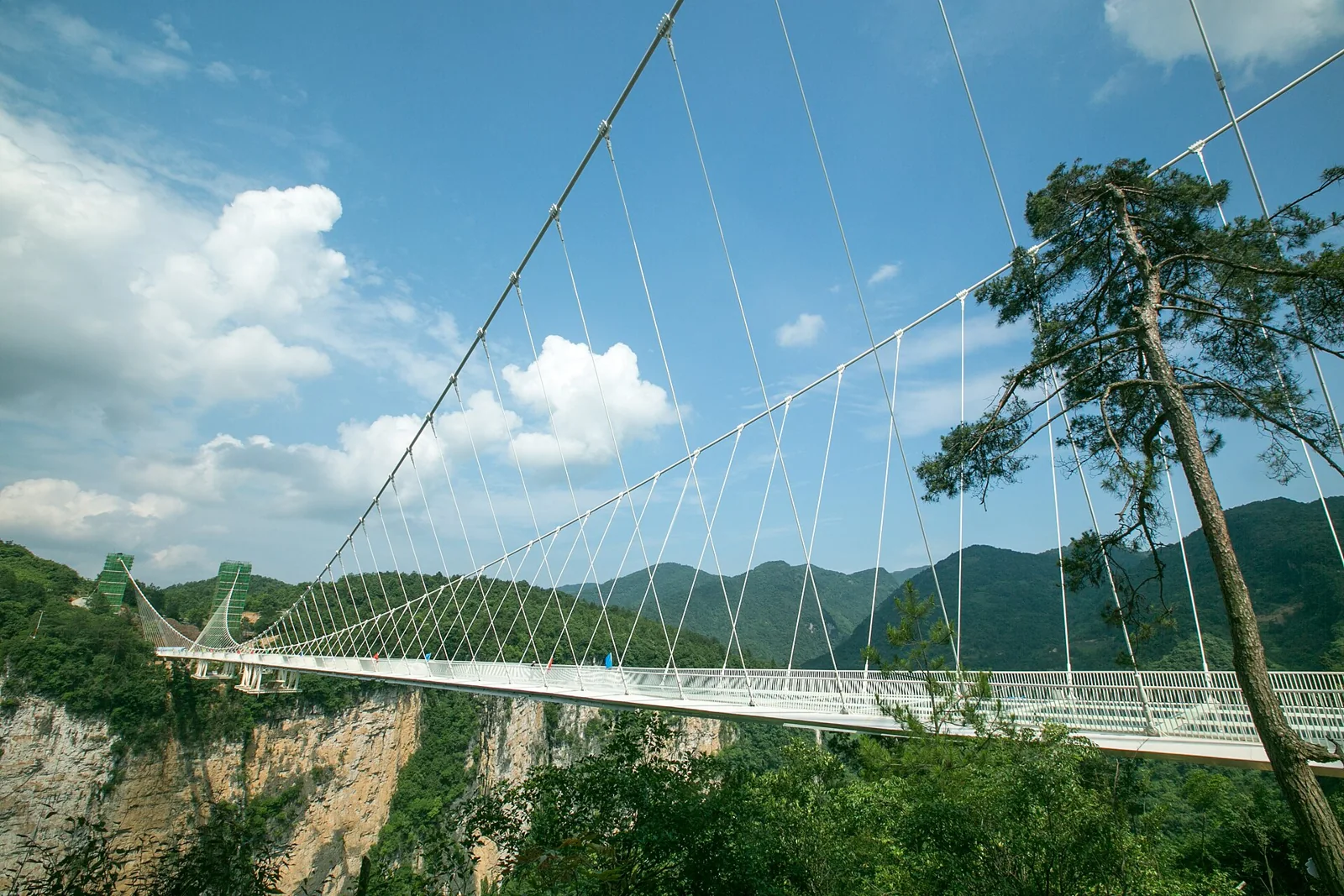
The transparent deck gives two different views. Looking downward reveals the canyon beneath your feet; looking along the bridge reveals how a thin crossing links two cliff edges. Take time for the second view even if you dislike looking through the floor. You can appreciate the structure without turning the visit into a contest of courage.
Architect Haim Dotan's 2016 conference paper describes a deliberately slender, pale crossing designed to have a restrained presence in the landscape. It distinguishes the **385-metre bridge length** from **430 metres between suspension towers**, with a width of six metres and a height of about 300 metres above the canyon. The different length figures refer to different measurements, rather than proving that one travel description is necessarily false.
The paper describes steel longitudinal and cross beams with glass infill, suspension cables and stainless-steel handrails. It specifically says glass handrails were considered and rejected. Calling the whole structure “made of glass” obscures what you are looking at: transparent walking panels sit within a much larger supporting system.
From a permitted stopping point, look for three relationships: the horizontal deck against the cliffs, the cables rising toward their supports, and the change between opaque edges and transparent panels. Photographing all three gives a more informative image than a tight shot of shoes on glass. Keep the circulation space clear; an interesting composition does not require blocking others or climbing for a better angle.
The Engineers' Society of Western Pennsylvania lists the bridge as the **2018 Arthur G. Hayden Medal** winner, an award recognizing innovation in special-use bridges. That is an engineering distinction, not a guarantee about today's operation. Likewise, the architect's original design capacity and laboratory tests do not replace the operator's current crowd, weather or equipment restrictions.
Once below the bridge, change the way you look
On the crossing, your attention is drawn to an open drop. In the canyon, the useful subject is the enclosing landscape: rock faces, water, vegetation and the changing space around the path. Treat the lower walk as another part of the visit rather than as the corridor leading back to a vehicle.
At an authorized pause, compare the width of the space ahead with the cliffs immediately beside you. Where does the water run relative to the walkway? Which surfaces are bare rock, and which support vegetation? Is a waterfall visible as a complete fall, or does the path reveal only a section of it? These questions give you something specific to observe even when the weather is unsuitable for a dramatic bridge photograph.
The operator names features including Tianhe Waterfall and Shenquan Lake, and its B itinerary continues through Momo Cave toward a lake-boat connection and the canyon exit. Named features are orientation aids, not a promise that every water effect, boat or path operates identically on your date. Ask staff how any interruption changes the continuation before joining a queue you believe is compulsory.
If you prefer this close landscape experience to exposed viewpoints, A is a coherent choice. You do not need to buy the bridge merely because it is the attraction most frequently pictured. If the bridge is your principal interest, keep enough attention and time for the rest of B: your route does not end when the glass crossing does.
Optional experiences can change both the bill and the route
The current booking notice says experience purchases are voluntary and advertises a **120-yuan, single-person bundle**. It cannot be split among several travelers; restrictions, weather, queues and maintenance can prevent individual activities. Insurance is suggested at **three yuan**; the notice directs people declining it to the visitor-centre ticket window or consultation desk for a declaration.
Ask what is included in the exact product you select. The booking list contains admission products, insurance variants and experience packages. An itinerary diagram naming a zipline, slide or elevator does not by itself mean that your chosen admission includes every item appearing along the diagram.
Before buying a bundle, identify your indispensable connection and your genuinely desired activities. Then ask for the available alternative if an activity is suspended or you cannot participate. This matters particularly when you see an experience as a way of avoiding a demanding descent: an unavailable ride can affect your physical route, not merely the entertainment value.
Avoid buying on behalf of another traveler on the assumption that they can use your unused activities. If members of the party want different experiences, compare separate purchases with the per-person package and establish where you will rejoin. Do not make the least confident person feel committed to an exposed activity because the rest of the party has already paid.
For wheelchair users, people who cannot manage steps or families with a pushchair, seek specific confirmation of the proposed route, boarding access and alternatives. We have not established a continuous step-free bridge-and-canyon itinerary, and the presence of several elevators is insufficient to label the whole destination accessible.
Passport booking: the field exists, but a form is not an issued ticket
The official product list has an English interface. In the B-line form we read, choosing **护照** — passport — revealed nationality/region, gender and birth-date fields alongside the traveler's name and passport number. The form also requests a ticket picker's name and a phone number for the order SMS. No personal information was entered for this guide and no order was submitted.
Use the official website's current purchase link so that you reach the intended operator product. Select the visit date before relying on the displayed price or time. Match each traveler's document type rather than leaving the default domestic identity-card option selected. If your nationality is missing or the phone field rejects your usable number, ask the operator how to complete the booking; substituting false identity details creates a problem at entry.
The booking notice describes booking five days ahead. However, the B form we loaded displayed selectable dates from October 14 through October 29, 2026. Follow the actual dated product calendar and ask about any discrepancy; neither that observed calendar nor its stock counter guarantees availability when you return later.
Concession labels in a dropdown do not prove that your foreign document qualifies for them. Before claiming a student, age or other reduction, get confirmation of the evidence required for your case. Save the eventual issued confirmation, route, date, traveler identity and refund terms together. A screenshot of an unsubmitted order amount is not admission.
Protect the return trip before you enter
The website and current booking notice advertise **08:00–16:00** for A and B; the guide page identifies 16:00 as the inspection cutoff. Do not read that as permission to arrive at 15:59 and then take an unrestricted full-length visit. Reserve a generous daylight block plus both road transfers, and ask about the last usable connections for your intended route.
The live notice estimates approximately two hours for A and three for B. Use those only as operator indications: photography, queues, optional experiences and your party's pace can change the day. Avoid tying a late arrival to an inflexible train or flight. A canyon-exit pickup with room for delay is a more workable plan than a schedule depending on every component running immediately.
For self-driving visitors, the current notice directs the approach from the Shuangping distribution centre up the Shuangshuang road to the visitor centre. Before leaving a vehicle, establish how you will return from the canyon exit to its actual parking position. For a hired transfer, have the operator quote both journeys and the collection point; “Grand Canyon transfer” is too vague to resolve a route-end mismatch.
The main website lists **0744-3353888**, with consultation hours **09:00–15:30**. Call with the route, intended date and the specific difficulty you need resolved. If B1 or bridge-only is essential, obtain a clear product and operating confirmation before paying for a different route.
If weather or equipment changes the plan, ask staff which continuation is open and how it affects your purchased product. Keep the ticket seller's terms: the booking notice describes free cancellation before opening on the visit date and a 10% order-amount fee afterward, but your selected product or distributor may have specific conditions. Resolve refund questions with that seller rather than assuming a website-wide slogan overrides the actual order.
For a first visit, the decisive preparation is simple: choose the experience you want, verify that the route is currently sold, and have a return plan for its real endpoint. Then you can spend the visit looking at the bridge and canyon instead of trying to repair a transport or ticket mismatch halfway through.
Sources and editorial note
Independent route/endpoints and bridge-design research. Read actual loaded official product list, notice and English B order form with passport option; no personal details entered, no submitted purchase. Architect Dotan2016 conference paper and ESWP2018 award list read. Old catalogue and guide inconsistencies explicitly separated.
No completed passport transaction, field visit, continuous step-free route or guaranteed stock. Ride inclusions, nationality concessions, phone compatibility and alternative route must be confirmed for the chosen product.
- https://www.zjjdaxiagu.com/
- https://www.zjjdaxiagu.com/guide.html
- https://www.zjjdaxiagu.com/ticket.html
- https://fx.zjjdaxiagu.com/html/pt/dxg/product/pub/list.html
- https://fx.zjjdaxiagu.com/html/pt/dxg/order/pub/book.html?productId=13047911212989631001&distrGroupId=002&distrId=&distrCode=null&u=null
- https://proceedings.challengingglass.com/index.php/cgc/article/download/179/176/739
- https://eswp.com/bridge/awards/